Alberta’s data-centre push leaves health questions unanswered
Over the past decade major tech companies have accelerated their buildout of hyperscale data centres across rural North America.
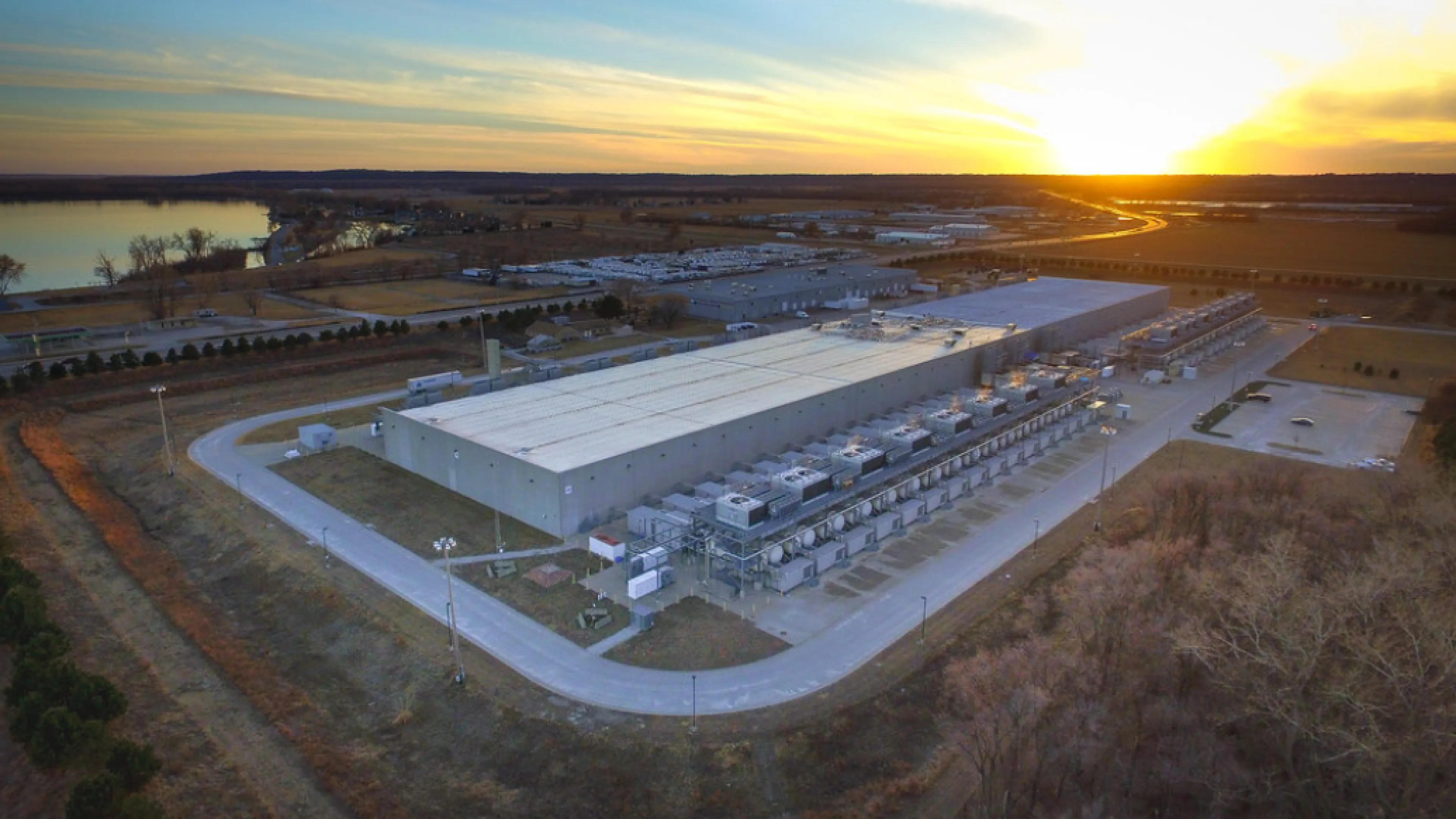
Several provinces are now pursuing that same buildout. Alberta has been the most aggressive, investing heavily to attract hyperscale projects. But there is no fulsome plan for how municipalities will shoulder the known costs to infrastructure and public health.
The behemoth installations are billed as clean infrastructure powering the digital economy. Reporting out of multiple U.S. states shows the other side of the coin. When built in small, under-regulated communities, data-centres create pressures that local systems were never designed to absorb.
In eastern Oregon, officials investigating a spike in miscarriages, atypical cancers, and other unusual medical conditions found widespread water contamination in household wells.
A survey of 70 wells found that 68 exceeded federal nitrate limits. Of the first 30 households surveyed, 25 reported recent miscarriages; six people had lost a kidney.
The region’s wastewater system was already under strain due to runoff from industrial megafarms. An Amazon data centre built in 2011 added millions of gallons of water to the same system. The facility drew on that contaminated groundwater for cooling, concentrating pollutants through evaporation before sending them back into the system. Testing found nitrate levels up to eight times Oregon’s safe limit.
In Holly Ridge, Louisiana, Meta’s $27-billion data-centre project is leaving another kind of footprint. Heavy construction traffic now moves through the 2,000-person town daily, contributing to a 600 per cent increase in collisions compared to the previous year.
A local school closed its front-lawn playground indefinitely, after three near-misses involving children and construction vehicles. Residents also report rust-coloured tap water.
And in Jerome Township, Ohio, where Amazon has two data-centres, EMS is struggling to keep up. Since 2021, first responders have answered 84 emergency calls to the facilities. Amazon’s security guards often make responders wait for clearance before allowing them entry.
In April, a fire at one site caused more than US $50 million in damage and occupied fire crews for over a day. Because both sites are fully exempt from property taxes (for a decade) local residents bear these costs.
Canada’s doctor-licensing walls are finally cracking
In a local B.C. interview last month, the federal Conservative Shadow Minister of Health zeroed in on the structural barrier at the centre of Canada’s health workforce crisis.
“We want a national (licensure) type of approach,” said Dan Mazier, MP for Riding Mountain, Manitoba. “We should have a national healthcare system with national doctors that can work anywhere in Canada.”
For its part, the Liberals’ 2025 election platform pledged to “implement a national licence for physicians and nurses, giving health workers more mobility across the country.”
Mazier told the Penticton Herald that more than 13,000 internationally-trained doctors currently settled in Canada are blocked from practice by a credentialing regime that no longer serves the public.
It’s a striking quantification of capacity Canada has chosen not to use. And it echoes what CHW contributor Code Black argued last month: the country’s shortage of doctors was never an accident. It’s policy.
That observation is now circulating outside of CHW’s usual orbit. The Toronto Sun ran a column in response to Black’s analysis, linking today’s shortages to decades of deliberate provincial cuts to medical training.
When two commentators at opposite ends of the spectrum converge on the same diagnosis, something in the air has changed.
Which brings us back to the Shadow Minister’s comments.
Mazier’s national licensure push is a sign that the political consensus around Canada’s fragmented credentialing has fractured — and that the era of rationing physician supply will be harder to defend in the years ahead, if it isn’t already.
What Ontario’s long-term care data actually show
Internal government data obtained by The Trillium shows which long-term care homes actually met Ontario’s own staffing targets, and which fell short.
The dataset, obtained via FOI and released after a year-long delay and multiple appeals, covers the fiscal year ending March 2024.
There is extreme variation in staffing levels. Some homes delivered well over the year’s interim target of 3 hours and 42 minutes of daily hands-on care per LTC resident. Others provided barely a third of that.
Municipal and non-profit homes consistently had better staffing.
At the start of the pandemic, municipal and non-profit homes also saw markedly fewer outbreaks and deaths. The Trillium’s data shows that this care-gap is still present.
The lowest-staffed homes were overwhelmingly for-profit operators, with seven of the bottom ten owned by one company, Southbridge Care Homes.
One facility, Chelsey Park in London, reported just over an hour of direct patient care per day in its final quarter — the only quarter for which it reported data.
Southbridge acquired 21 homes from Revera in May, consolidating two of the province’s major investor-backed LTC chains.
The Ontario opposition says that Southbridge hired government-connected lobbyists in late 2020, shortly before the Ford government passed Bill 218. The legislation shields LTC operators from lawsuits related to COVID exposure unless plaintiffs can prove gross negligence.
The law treats chronic understaffing as ordinary negligence, keeping most actual cases out of the courts.