AI in healthcare needs a workforce strategy, not just a technology strategy
AI is quickly changing the Canadian healthcare system. More than 12,000 primary care clinicians enrolled in Canada Health Infoway's national AI scribe program between June 2025 and February 2026. A 2026 national survey found 28 per cent of physicians already use an AI scribe, and another 42 per cent want to.
The early results are real. Infoway's six-month evaluation found clinicians saved about an hour a week during work hours and nearly another hour after hours.
But implementing a technology is not the same as transforming a health system.
Emergency physician Ali Abdalvand and I recently argued in The Conversation that AI saves doctors time but won't fix burnout. Saved time is often absorbed: in Infoway's program, half of clinicians redirected it to other administrative work and one in five added appointments. A large U.S. study in JAMA found AI scribes cut documentation time by 16 minutes a day and added about half a visit a week; its authors noted such modest reductions are unlikely to fully explain changes in burnout.
That matters because burnout is entrenched. In the Canadian Medical Association's 2025 survey, 46 per cent of physicians reported high burnout, up from 30 per cent in 2017. Burnout grows from mismatches in workload, control, reward, community, fairness and values.
So the policy question is no longer whether AI can help. It is whether we have built the right environment and culture to adopt this new technology in a healthy and safe way.
Organizational psychology is the science of how people experience change, why sensible innovations meet resistance, and how leadership, autonomy, trust and workload decide whether a tool lightens a job or adds a new demand. Without considering the human factor, well-intentioned programs can miss their goals or create new psychosocial hazards.
Ontario offers a warning. In May, its Auditor General reported that most of the 20 AI scribes approved for clinicians made errors in simulated tests, with 12 recording the wrong drug at least once, and that five vendors were approved without required privacy or security assessments.
(Photo credit: Dr. Ehsan Etezad)
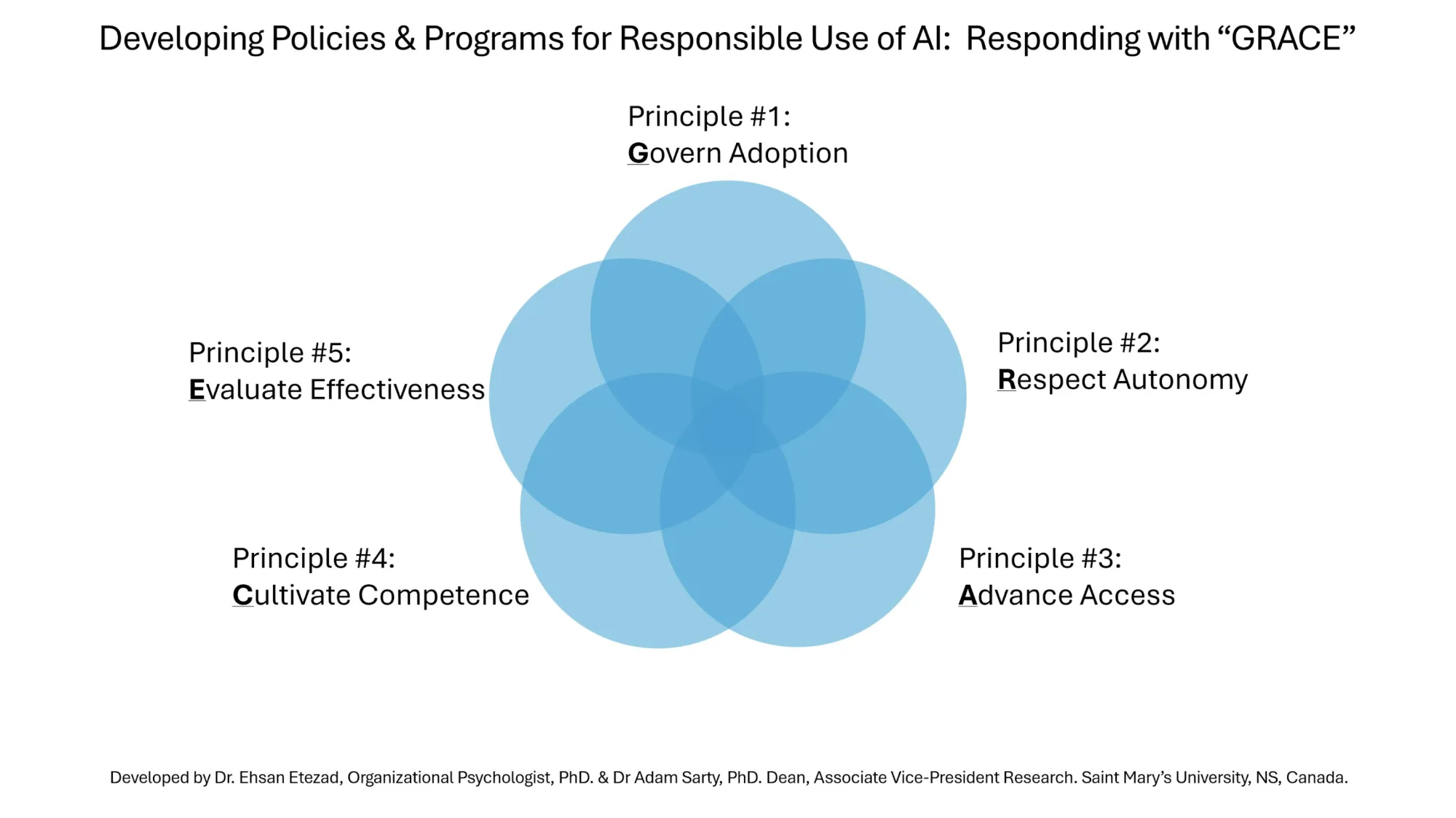
To close that gap, we developed an evidence-based framework called GRACE, five principles for adoption:
Govern adoption. Put frontline clinicians on AI committees and write a stop-rule for each pilot: if it doesn't return measurable time or exceeds an agreed error threshold, it ends or is redesigned.
Respect autonomy. Keep use voluntary, let clinicians choose among vetted tools, and keep clinical judgment in human hands.
Advance access. Integrate tools into the core clinical record and fund them fairly. Without sustained funding, well-resourced practices risk pulling ahead of everyone else.
Cultivate competence. Provide protected, paid learning time and peer champions. Access does not create skill or confidence.
Evaluate effectiveness. Measure time actually returned, after-hours work, note accuracy, burnout and patient safety.
(Photo credit: Dr. Ehsan Etezad)
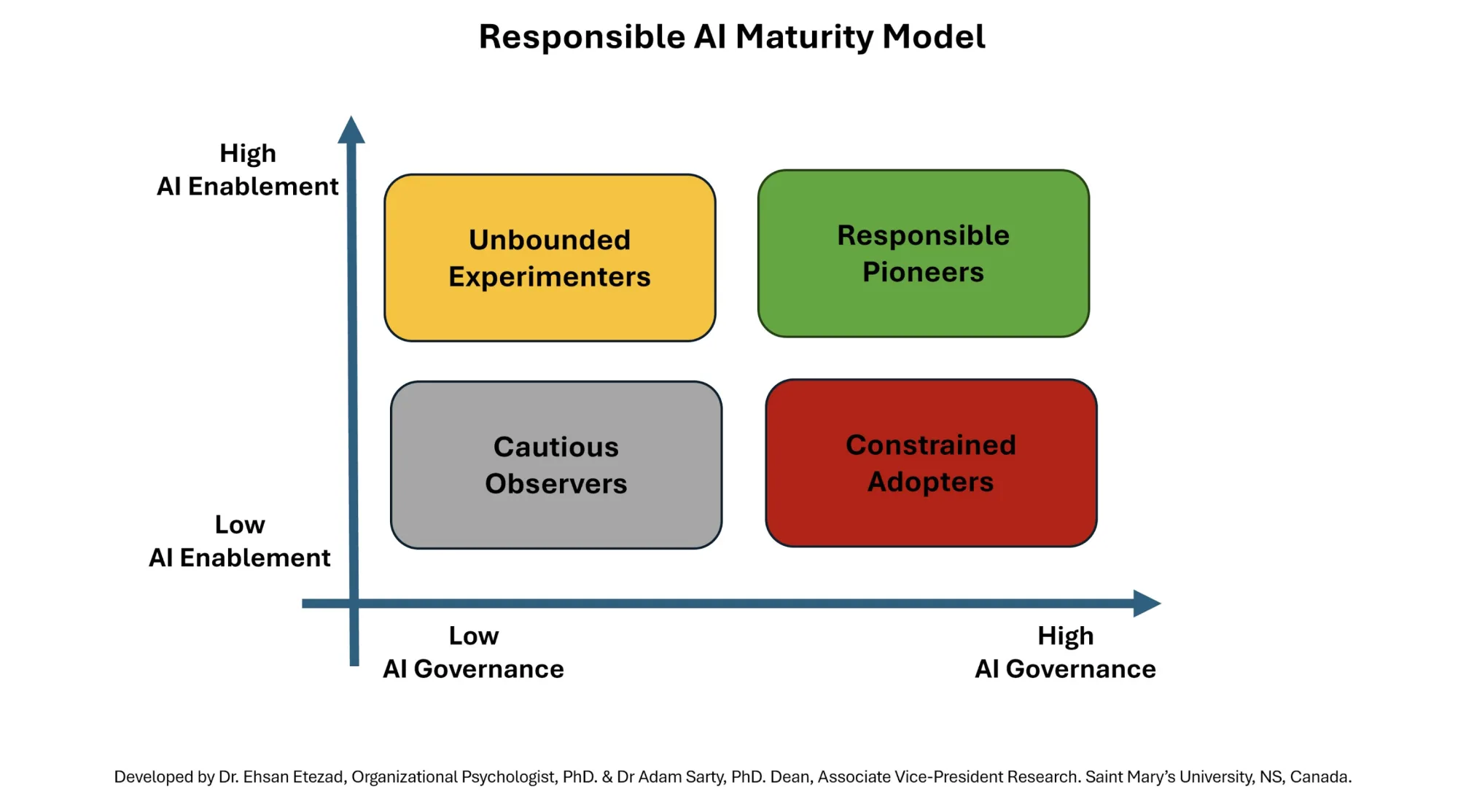
GRACE rests on a simple matrix with two dimensions: Enablement asks whether people can access AI and have the skills, resources and support to use it well. Governance asks whether policies, oversight, safeguards and accountability exist.
Neither suffices alone. Enablement without governance puts powerful tools in busy hands without clear accountability. Governance without enablement produces rules nobody has the time, training or infrastructure to follow.
The goal is to advance both together, creating what we call Responsible Pioneers: organizations and professionals empowered to experiment within appropriate safeguards.
GRACE is a framework, primarily developed by an organizational psychologist, and its value is making adoption's human side measurable before the technology is too embedded to redesign.
The timing matters. Health ministers outside Quebec have endorsed Pan-Canadian AI for Health Guiding Principles, and provinces such as British Columbia have published responsible AI frameworks.
In Canada, now is the right time to turn these principles into practice:
- First, build organizational psychology and human factors expertise into AI procurement, implementation and evaluation, alongside clinical, privacy and technical review.
- Second, make frontline participation a condition of funding, before and during rollout.
- Third, require evaluation beyond productivity, tracking time returned, after-hours work, autonomy, burnout and safety across professions and practice settings.
A system that sees more patients but leaves clinicians more exhausted has not improved. It has borrowed against its workforce, held together only by health-care workers who keep showing up for their communities at great personal sacrifice.
Canada's choices now will shape not only which technologies we adopt, but what clinical work feels like and the quality of care patients receive.
The question is not just what AI can do for health care, but how to implement it with the human factor at the centre: a win for those who deliver care, and a win for those who depend on it.
Dr. Ehsan Etezad is a Vancouver-based Organizational Psychologist. He is the Co-Founder and CEO of MeUs Science Corp. He collaborates with regulators, research institutions, and private companies to enhance psychological health and safety, leadership, and team productivity.
The views expressed are those of the author(s). Canada Healthwatch publishes a range of perspectives and does not necessarily endorse the opinions presented.